How to Use Diatomaceous Earth in Your Garden
Diatomaceous earth (DE) has become a favorite tool for gardeners seeking all-natural pest control. Made from the fossilized remains of tiny aquatic organisms called diatoms, this powder is safe for humans and pets while effectively managing many common garden pests. When used correctly, diatomaceous earth in your garden can reduce insect populations without harmful chemicals, protecting both plants and beneficial insects.
The main SEO keyword for this article is “Diatomaceous Earth in Your Garden.”
What Is Diatomaceous Earth?
Diatomaceous earth is a fine, powdery substance composed mainly of silica. Its effectiveness against insects comes from its abrasive texture. When pests like ants, slugs, aphids, and beetles come into contact with DE, it damages their exoskeletons, causing dehydration and eventually death.
-
Food-grade DE is safe for use around pets, children, and edible plants.
-
Non-toxic action means it doesn’t rely on chemical pesticides, making it environmentally friendly.
Benefits of Using DE in the Garden
Using diatomaceous earth in your garden offers several advantages:
-
Safe for Humans and Pets: Unlike many chemical pesticides, DE poses minimal risk when applied properly.
-
Controls Multiple Pests: Effective against crawling insects like ants, fleas, slugs, snails, and beetles.
-
Environmentally Friendly: DE is natural and biodegradable.
-
Supports Integrated Pest Management (IPM): Can be combined with traps, companion planting, and biological controls for comprehensive pest management.
How to Apply Diatomaceous Earth
Proper application is key to maximizing effectiveness:
1. Dry Application
-
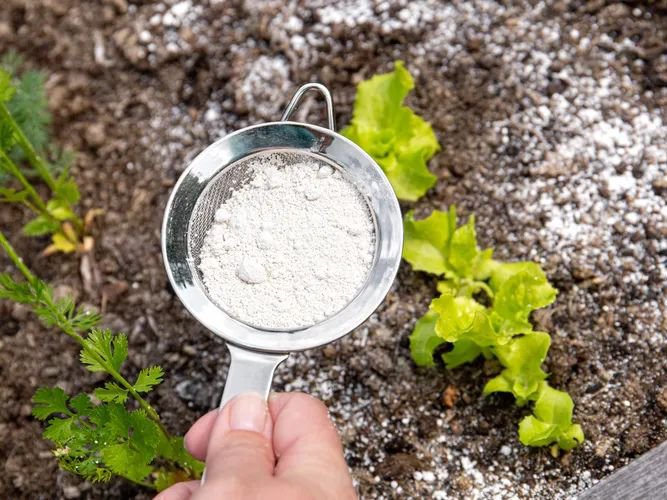
Sprinkle DE directly around the base of plants or along garden paths where insects travel.
-
Use a dusting applicator for even coverage.
-
Avoid wet conditions; water reduces its effectiveness until it dries again.
2. Spot Treatment
-
Focus on areas where pests are most active, such as under leaves or near mulch.
-
Reapply after heavy rain or watering to maintain efficacy.
3. Indoor and Container Use
-
DE can also protect potted plants and indoor houseplants from pests.
-
Apply lightly around the soil surface, ensuring it does not become airborne excessively.
Conclusion
Using diatomaceous earth in your garden is a safe, natural, and effective way to control pests without harming plants, pets, or beneficial insects. By applying DE correctly, maintaining dry conditions, and combining it with other pest management strategies, gardeners can enjoy healthier, pest-free gardens throughout the season.